
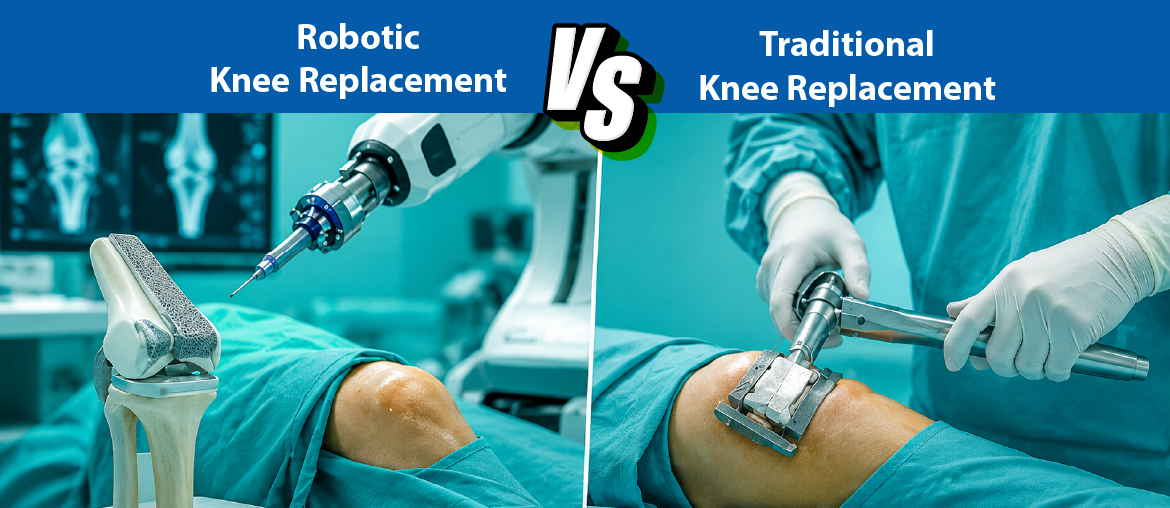
Knee arthritis is one of the leading causes of chronic pain and disability worldwide. As people age, the protective cartilage within the knee joint gradually wears away, causing pain, stiffness, swelling, and difficulty performing daily activities. When medications, physiotherapy, injections, and lifestyle modifications no longer provide relief, knee replacement surgery becomes an effective solution.
Over the years, knee replacement techniques have evolved significantly. While Traditional Knee Replacement Surgery has successfully helped millions of patients regain mobility, the introduction of Robotic Knee Replacement Surgery has brought a new level of precision, accuracy, and personalization to joint replacement procedures.
Many patients often ask: What is the difference between robotic and traditional knee replacement? Is robotic surgery better? Which option is right for me?
This blog explores the key differences between Robotic Knee Replacement and Traditional Knee Replacement, helping you make an informed decision about your knee health.
Understanding Knee Replacement Surgery
Knee replacement surgery, also known as Total Knee Replacement (TKR), involves removing damaged cartilage and worn-out joint surfaces and replacing them with artificial implants designed to restore smooth movement and reduce pain.
The primary goals of knee replacement surgery are:
- Relieve chronic knee pain
- Improve joint function
- Correct deformity
- Restore mobility
- Enhance quality of life
Both robotic and traditional methods achieve these goals, but they differ significantly in planning, execution, and precision.

What Is Traditional Knee Replacement?
Traditional Knee Replacement Surgery is a well-established procedure performed manually by an orthopedic surgeon using specialized surgical instruments.
During the surgery:
- The surgeon assesses the knee joint.
- Bone cuts are made using conventional alignment guides.
- The damaged portions of the knee are removed.
- Artificial implants are placed manually.
- Alignment and balance are adjusted based on the surgeon’s experience and judgment.
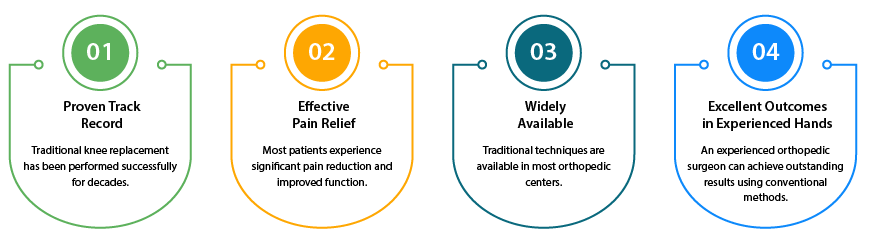
Traditional knee replacement has been successfully performed for decades and continues to provide excellent outcomes for many patients.
What Is Robotic Knee Replacement?
Contrary to popular belief, a robot does not perform the surgery independently.
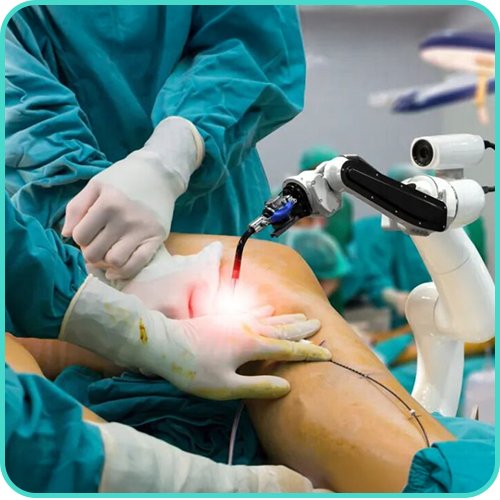
In Robotic Knee Replacement Surgery, the orthopedic surgeon remains in complete control while utilizing advanced robotic technology for planning and execution.
The robotic system helps by:
- Creating a detailed 3D model of the patient’s knee.
- Analyzing individual anatomy.
- Planning implant size and positioning.
- Guiding bone preparation with exceptional accuracy.
- Assisting in precise alignment and balancing of the knee.
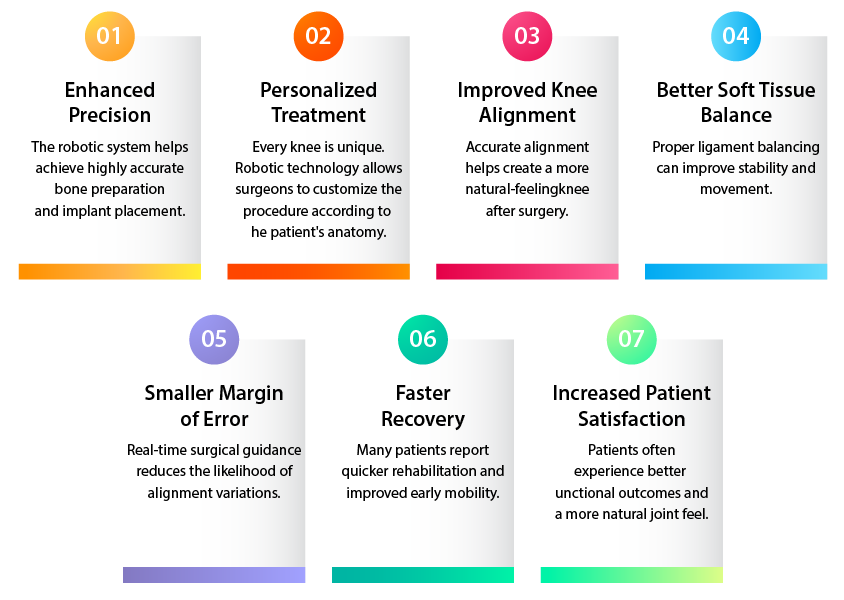
This technology allows surgeons to customize the procedure according to each patient’s unique knee structure.
Key Differences Between Robotic and Traditional Knee Replacement
1. Surgical Planning
Traditional Knee Replacement:
Planning is based on X-rays, clinical examination, and standard alignment methods.
Robotic Knee Replacement:
Uses advanced imaging and computer-assisted planning to create a personalized surgical strategy before the procedure.
Advantage: Robotic Knee Replacement
2. Accuracy and Precision
Traditional Knee Replacement:
Accuracy depends largely on the surgeon’s skill and manual instruments.
Robotic Knee Replacement:
The robotic system assists in highly precise bone cuts and implant placement with real-time feedback.
Advantage: Robotic Knee Replacement
3. Implant Positioning
Correct implant positioning is critical for long-term success.
Traditional Knee Replacement:
Implant placement relies on conventional guides and surgeon judgment.
Robotic Knee Replacement:
The robotic platform helps achieve optimal implant positioning tailored to the patient’s anatomy.
Advantage: Robotic Knee Replacement
4. Soft Tissue Protection
The ligaments and surrounding soft tissues play a crucial role in knee movement.
Traditional Knee Replacement:
Greater reliance on manual balancing techniques.
Robotic Knee Replacement:
Allows more accurate ligament balancing while minimizing unnecessary soft tissue disruption.
Advantage: Robotic Knee Replacement
5. Personalization
Traditional Knee Replacement:
Uses standardized alignment principles.
Robotic Knee Replacement:
Provides a patient-specific surgical plan customized to individual anatomy.
Advantage: Robotic Knee Replacement
6. Recovery Experience
Patients undergoing robotic surgery often experience:
- Less postoperative discomfort
- Reduced swelling
- Faster mobilization
- Earlier return to daily activities
However, recovery also depends on factors such as age, fitness level, rehabilitation, and overall health.
Advantage: Often Robotic Knee Replacement
7. Long-Term Implant Performance
Proper implant alignment can significantly affect the lifespan of a knee replacement.
Research suggests that improved accuracy may contribute to:
- Better joint function
- Improved patient satisfaction
- Reduced wear over time
- Enhanced implant longevity
Advantage: Potentially Robotic Knee Replacement
Benefits of Robotic Knee Replacement Surgery
Benefits of Traditional Knee Replacement Surgery
Despite the advantages of robotic technology, traditional knee replacement remains a highly successful procedure.
Common Myths About Robotic Knee Replacement
Myth 1: The Robot Performs the Surgery
Fact: The surgeon performs the surgery. The robotic system serves as an advanced guidance tool.
Myth 2: Robotic Surgery Is Experimental
Fact: Robotic knee replacement is a well-established and widely adopted technology used globally.
Myth 3: Recovery Is Instant
Fact: Recovery is generally faster, but rehabilitation and physiotherapy remain essential.
Myth 4: Traditional Surgery Is Ineffective
Fact: Traditional knee replacement continues to provide excellent outcomes when performed by experienced orthopedic surgeons.
Robotic Knee Replacement vs Traditional Knee Replacement: Quick Comparison
| Feature | Traditional Knee Replacement | Robotic Knee Replacement |
| Surgical Planning | Standard | Personalized 3D Planning |
| Implant Positioning | Manual | Highly Precise |
| Alignment Accuracy | Good | Superior |
| Soft Tissue Protection | Standard | Enhanced |
| Customization | Limited | High |
| Recovery Experience | Good | Often Faster |
| Technology Assistance | No | Yes |
| Long-Term Precision | Good | Enhanced |
Which Option Should You Choose?
The best choice depends on:
- Severity of arthritis
- Knee deformity
- Age and activity level
- Overall health
- Surgeon expertise
- Availability of robotic technology
While robotic technology offers several advantages in precision and personalization, the most important factor remains choosing an experienced orthopedic and joint replacement surgeon who can recommend the most appropriate treatment for your specific condition.
Conclusion
Both Traditional Knee Replacement Surgery and Robotic Knee Replacement Surgery are effective treatments for advanced knee arthritis. However, robotic technology has transformed joint replacement by providing enhanced precision, personalized planning, improved alignment, and potentially faster recovery.
For patients seeking the latest advancements in orthopedic care, Robotic Knee Replacement Surgery offers a modern approach that combines the expertise of the surgeon with cutting-edge technology to deliver optimal outcomes.
If chronic knee pain is affecting your mobility and quality of life, consult an experienced orthopedic and joint replacement specialist to determine whether robotic or traditional knee replacement is the best option for you.